Remanufacturing a Motorcycle Fog Light Bracket with 3D Scanning and PA12-CF15 Printing
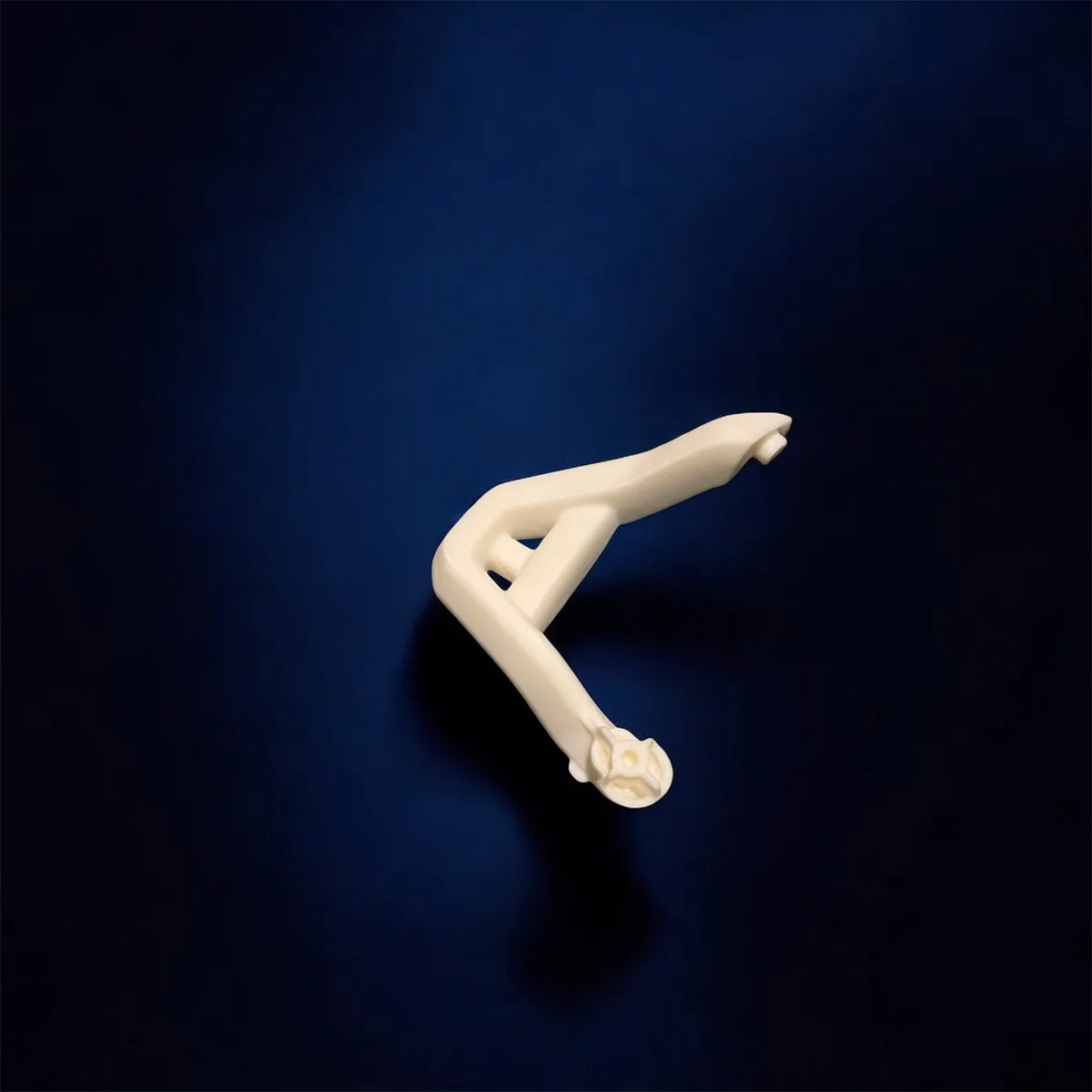
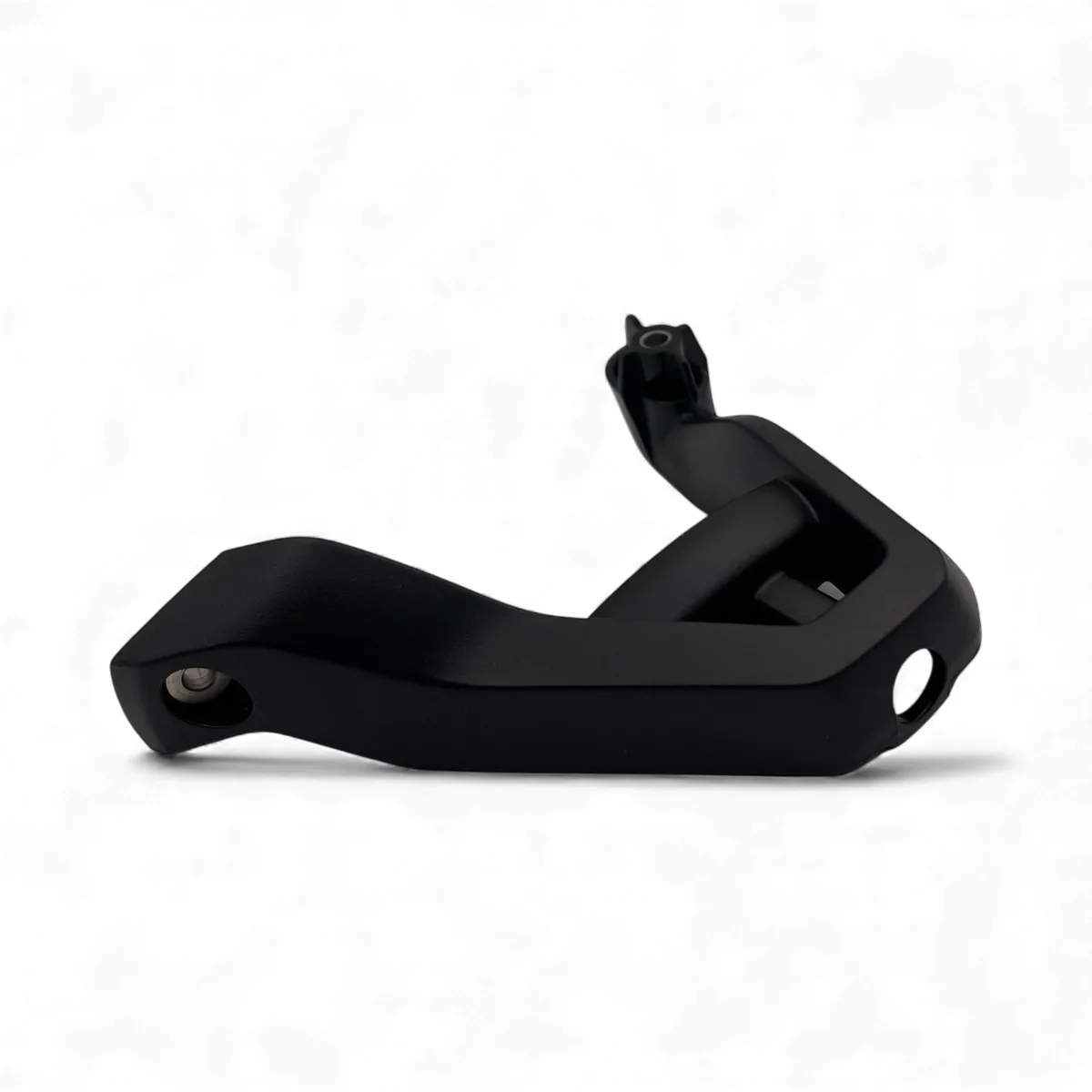
A common problem with older or low-volume motorcycles is that losing or breaking a small plastic mounting bracket can become a real headache — the original manufacturer no longer supplies replacements. A client came to us with exactly this challenge: the right-side counterpart of a motorcycle’s fog light bracket was missing, and no factory part could be sourced anywhere. The solution came from combining 3D scanning, reverse-modeling, and industrial 3D printing.
The Challenge: Mirrored Geometry, Not a Simple Copy
The bracket originally existed in left and right-side versions, but the right-side piece was lost. At first glance this looks like a simple task: given the left-side part, produce its mirrored counterpart. In practice, though, replacing a mechanical part is never just about copying the outer shape — it requires accounting for:
- the exact position of the mounting points,
- the mating surfaces,
- the geometric symmetry,
- the mechanical properties of the material,
- the constraints imposed by the manufacturing technology.
Choosing the right manufacturing process at the design stage determines the final fit. In this case the goal wasn’t a new design, but an accurate, mirrored reproduction of the original part.
3D Scanning: Digitizing the Existing Part
Traditional measurement — calipers, micrometers — works well for simple geometries, but a multi-curved, uniquely shaped mounting bracket carries significant risk of error with manual methods. Even a few tenths of a millimeter off can cause fitting problems, so we opted for 3D-scanning-based digital capture.
During scanning we recorded the part’s full spatial geometry as a digital point cloud, then built a manufacturing-ready 3D model from the digitized geometry. Since the goal was to reproduce the original form rather than modify the design, a full classical reverse-engineering pass wasn’t needed — processing the scanned geometry, mirroring it, and preparing it for manufacturing was enough.
Validation: PLA Prototype and Fit-Checking
Before final production, we printed a test piece in PLA. The prototype wasn’t meant for actual use — its purpose was geometric verification: are the mounting points positioned correctly, does it fit the motorcycle precisely, and is any correction needed.
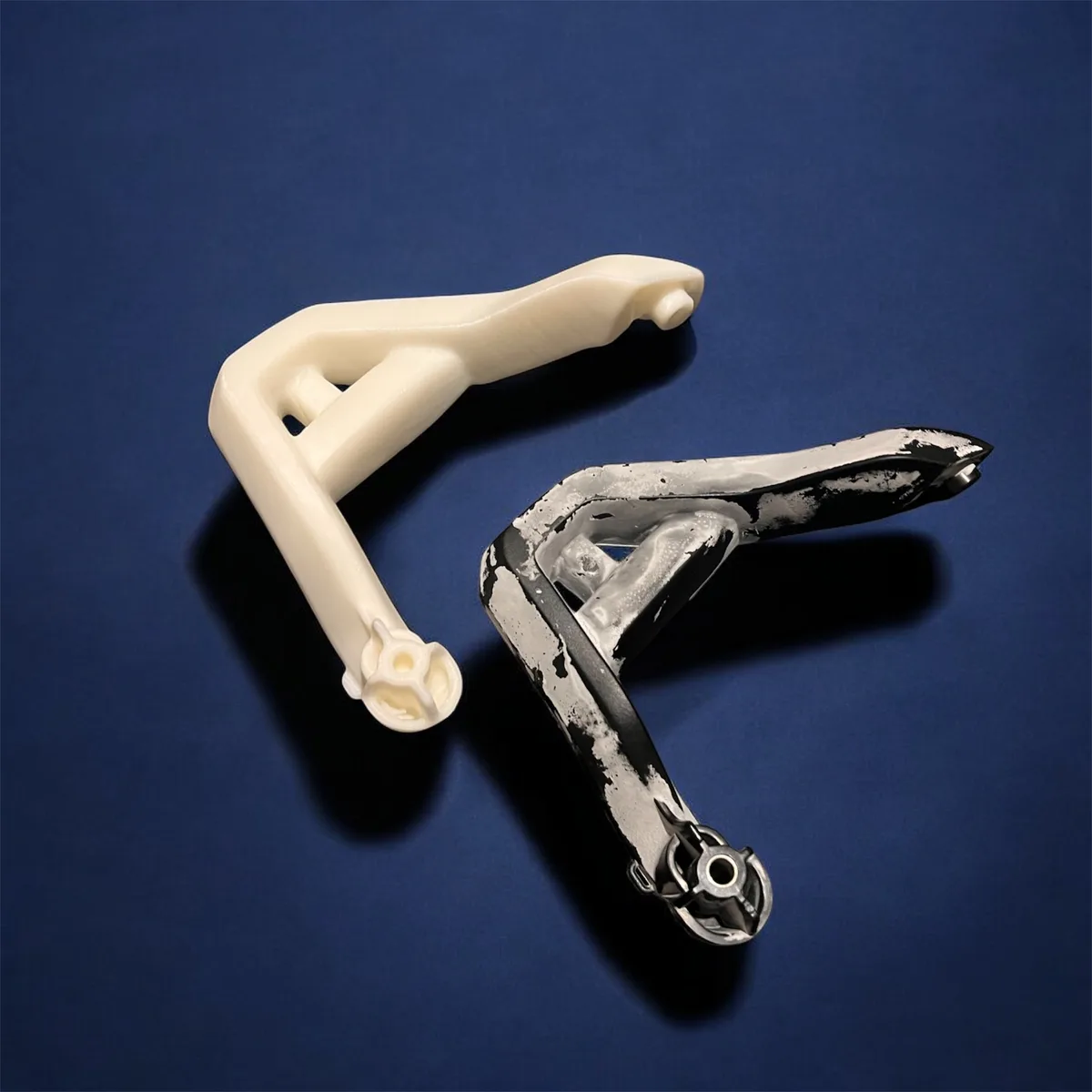
The biggest advantage of rapid prototyping is that a physical part can be produced from a digital model in a short time, catching design errors before final production. The PLA validation piece fit its intended location successfully, clearing the way for final manufacturing.
Final Manufacturing: PA12-CF15 Composite via FDM Printing
For the final part we chose PA12-CF15, a carbon-fiber-reinforced composite — an excellent choice for functional parts where higher mechanical strength, stiffness, and long-term durability matter, especially in a motorcycle’s demanding operating environment.
Manufacturing used FDM (Fused Deposition Modeling) technology, with the following parameters:
- Material: PA12-CF15
- Layer height: 0.2 mm
- Nozzle diameter: 0.4 mm
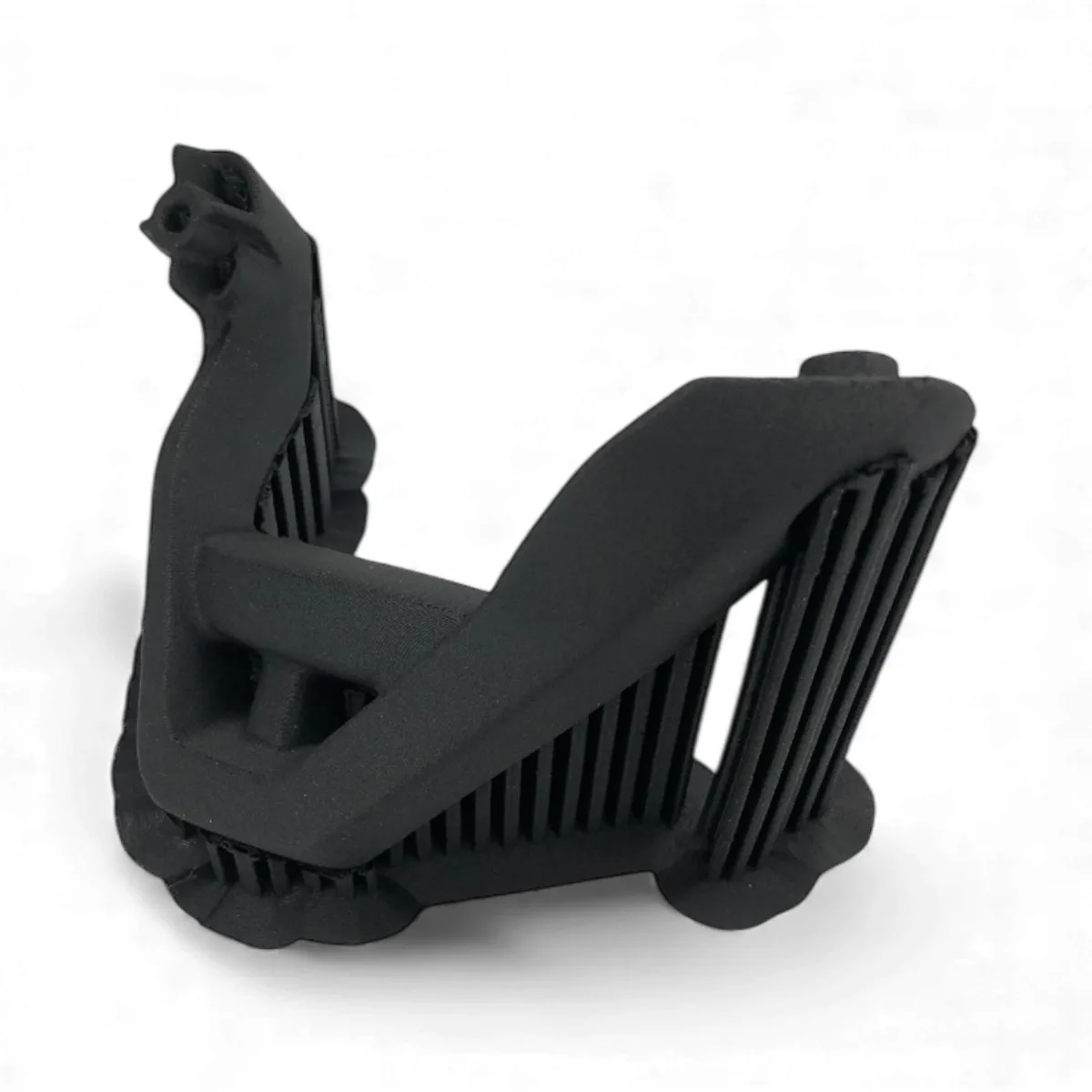
These parameters struck the right balance between detail, surface quality, mechanical performance, and print time.
Summary
Traditional manufacturing technologies — injection molding, CNC machining — are excellent solutions for high volumes, but for a single part or small batch they’re often uneconomical due to tooling costs and long lead times. The combination of 3D scanning, reverse-modeling, and 3D printing instead makes it possible to produce an accurate replica of a discontinued part quickly and cost-effectively, straight from a digital model — much like how we previously remanufactured a VW Golf 2 throttle lever using 3D scanning and PA12-CF15 printing.
Whether it’s a missing vehicle part, an industrial component, or a custom manufacturing need, our engineering background means we don’t just copy the part — we design the entire process around function, material selection, and manufacturing technology. Get in touch for a quote on our parts manufacturing service for part digitization or industrial 3D printing!
Related Articles
Planning a Similar Project?
Send us your model or drawing — free consultation, with personalized quotes within 24 hours.