Tool Changer, IDEX, or AMS? Which 3D Printing Technology Is Best for Industrial Use?
As industrial 3D printing has evolved, a wide range of multi-material and automated solutions is now available — manufacturers regularly run into terms like Tool Changer, IDEX, and AMS. None of them, though, is a universally “best” solution: the right system always depends on the application, production volume, and business goals.
Much of the marketing material out there highlights flashy multi-color printing, even though that’s typically a secondary concern in industrial parts manufacturing — the real value lies in reliability, production safety, automation, and quality. In our own production environment, we ultimately settled on IDEX and AMS systems — but not for the reasons most vendors advertise. Here’s why.
Why Multi-Color Printing Isn’t the Main Industrial Concern
When someone first encounters an IDEX or AMS system, nearly every promotional video shows eye-catching, multi-color figurines or decorative objects. Industrial environments look completely different: in mechanical, automotive, or electronics parts manufacturing, the finished part is almost always made from a single technical material, and the goal isn’t visual appeal but dimensional accuracy, the right mechanical properties, predictable production time, low scrap rates, and minimal human intervention.
That’s why the functions that actually increase productivity matter far more to us — as we cover in detail in our article on how FDM and MSLA technology works, FDM remains the most widely used industrial process today precisely because of its versatility.
What Is an IDEX System, and Why Is It More Than a Dual-Extruder Printer?
IDEX (Independent Dual Extruder) describes a design where the two print heads move completely independently of one another. At first glance it looks like just a dual-extruder printer, but it actually offers much more: simultaneous use of two different materials or colors, water-soluble support material, and two special modes — Copy Mode and Mirror Mode. In industrial applications, two-color printing is by far the least important of these.
The Biggest Advantage: Professional Support Materials
One of the biggest challenges with complex geometries is support structures. Normally printed from the same material as the part itself, supports are hard to remove, can leave marks on the surface, can damage the part, and require lengthy post-processing. IDEX takes this to an entirely new level.
Water-soluble support. One extruder prints with PVA or BVOH support material — once printing is done, the part just needs to sit in water until the support dissolves on its own. The result is excellent surface quality, minimal post-processing, the ability to produce complex internal geometry, and damage-free support removal. This is especially useful for fluid channels, enclosed structures, complex mechanical parts, and lab equipment.
PLA–PETG support combination. Expensive water-soluble support isn’t always necessary — one of the best-known industrial tricks is printing a PLA part with PETG support, or vice versa. Since the two materials only bond to a limited degree, the support comes off easily while critical surfaces stay noticeably cleaner, significantly cutting down post-processing time.
Copy and Mirror Mode: Double Capacity, Mirrored Parts
One of IDEX’s least-known yet extremely useful features is Copy Mode: in this mode, both extruders print the same part simultaneously from the same G-code, so a single print cycle produces two identical parts. If a part normally takes 8 hours to print, Copy Mode delivers two parts in that same 8 hours — a meaningful capacity boost for small- and medium-batch production, similar to how overall print speed is determined by the whole system, not a single spec.
In Mirror Mode, one extruder prints the original model while the other prints its mirrored counterpart — particularly useful for parts that come in left- and right-hand versions, such as covers, mounting brackets, chassis components, or robotics parts. This saves time and simplifies how production is organized.
What Is an AMS System, and Why Isn’t It Just About Multi-Color Printing?
The AMS (Automatic Material System) is primarily an automatic filament-handling system, which most people use exclusively for multi-color printing. In industrial use, though, entirely different functions turned out to be the most valuable for us.
The most important is automatic backup filament: when a spool runs out, the system detects the end of the filament, loads the pre-assigned backup spool, and resumes printing after a few seconds’ pause. It might sound minor at first, but it significantly increases production reliability.
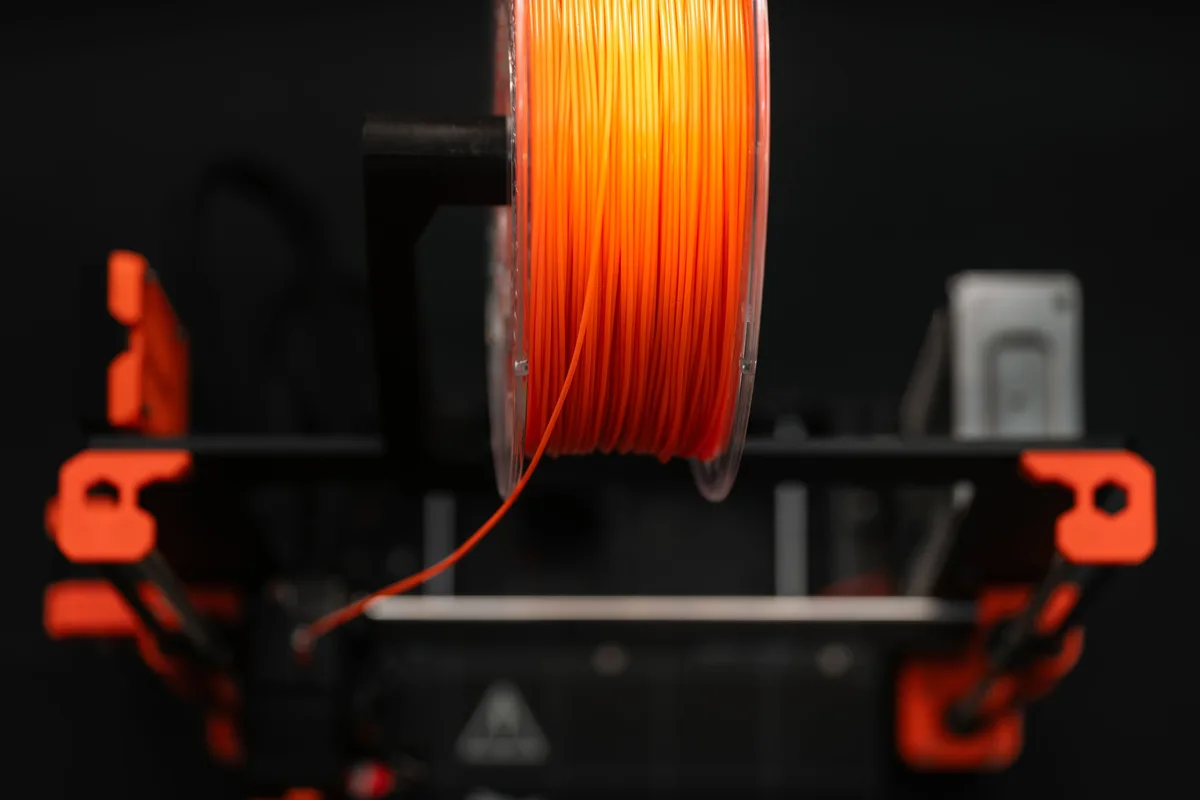
Closely related to this is maximum spool utilization. With conventional printers, it’s common to have 80-200 grams of material left on a spool that often gets set aside because it might not be enough for the next job. AMS puts these “last few meters” to use: when one spool runs out, the system automatically switches to the next, resulting in less waste, smaller inventory requirements, and lower material loss.
During a 20-40 hour print, there used to always be a risk that the filament would run out overnight and the entire job would end up scrapped — AMS practically eliminates that risk, which matters even more when several machines are running at once on a print farm.
When Is a Tool Changer the Better Choice — and What’s Its Hidden Challenge?
Tool Changer systems are undoubtedly a highly advanced technology: they allow automatic switching between different nozzle diameters, materials, and specialized extruders, which can be a huge advantage in certain applications. There is, however, a technical challenge that comes up less often in conversation.
One of the basic requirements for successful FDM printing is a perfect first layer — if it isn’t right, dimensional accuracy suffers, warping can occur, the part can detach, and the entire print can fail outright. Several factors affect this: the bed’s flatness — which expands and can deform under heat, and the larger the bed, the harder it is to keep it perfectly flat — as well as the accuracy of the measurement system that modern printers use to probe the bed directly with the nozzle.
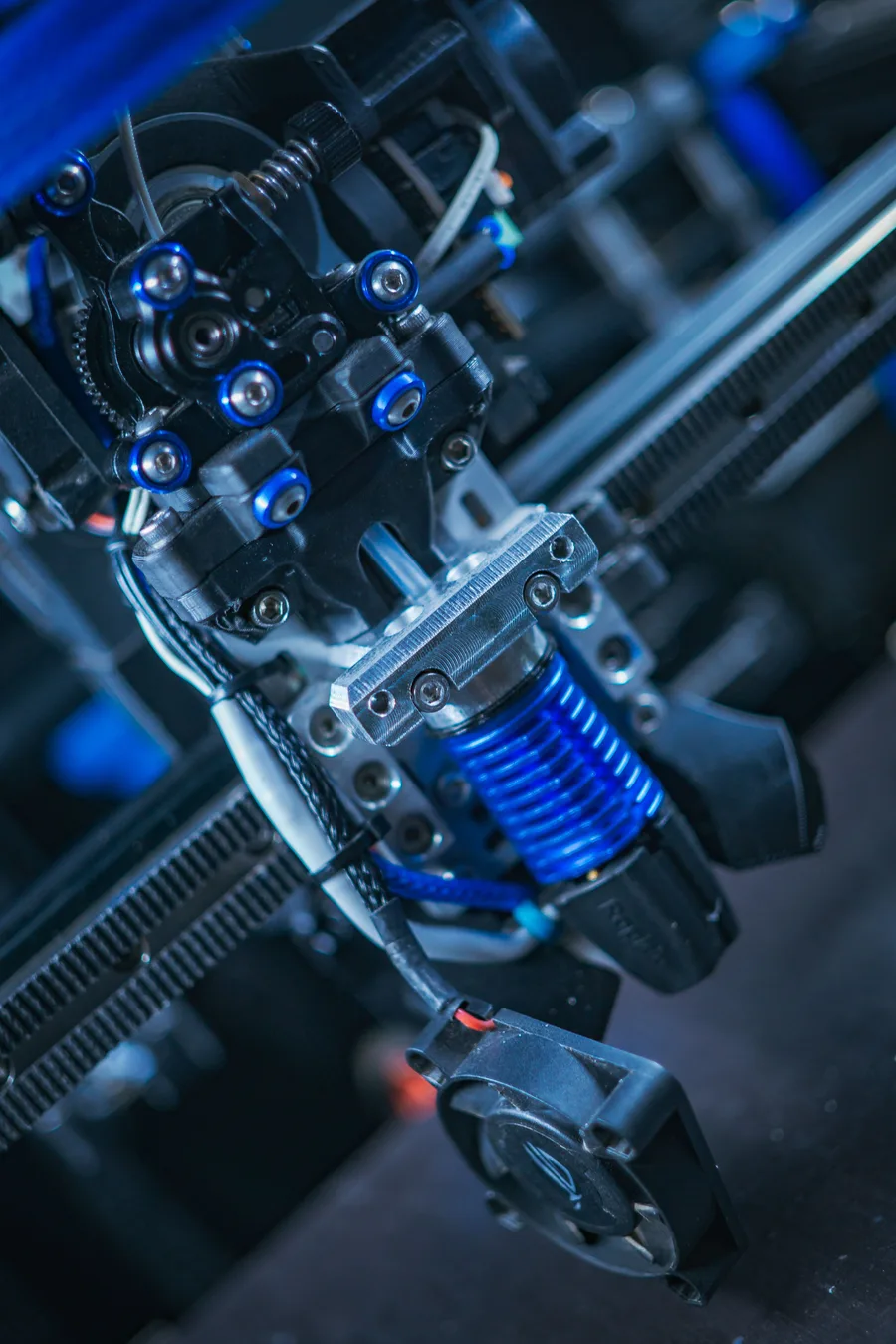
With a Tool Changer, several separate print heads get mechanically mounted and dismounted — however precise the mechanics, there are always mounting tolerances, positional deviations, and mechanical wear, meaning each tool’s actual nozzle height can differ slightly from the others. On top of that, nozzles working with carbon-fiber, glass-fiber, or other abrasive materials wear faster, which shifts the actual Z-position over time — so each tool’s position relative to the bed needs to be checked separately. This is certainly solvable, but it adds complexity, calibration time, and more room for error.
That said, this isn’t a knock against Tool Changer systems. If a project regularly requires different nozzle diameters, specialized extruders, or unusual material combinations, a Tool Changer system can provide a major advantage. In our own production profile, though, the emphasis is on high reliability, automated batch production, and predictable operation — and for those needs, IDEX and AMS proved to be the optimal choice.
How Does This Fit Into a Complete Engineering Service?
A successful industrial project isn’t just about the printer — effective execution often starts with producing the digital model itself. Our services include 3D scanning and reverse modeling, as demonstrated in our remanufacturing of a discontinued VW Golf 2 throttle lever, so we can provide an end-to-end solution from digitizing an existing part to optimized FDM production.
Summary
Tool Changer, IDEX, and AMS all represent highly advanced technology, but none of them is universally “the best” — the right choice always depends on the application, production volume, and reliability requirements. In our own production environment, IDEX’s professional support-material options, the capacity boost from Copy and Mirror Mode, and AMS’s automatic filament switching and spool utilization proved to be the most valuable — not the multi-color printing that gets the marketing spotlight.
For industrial 3D printing, it’s worth asking a supplier about reliability, production safety, and automation rather than the flashy features. If you need a partner who applies engineering judgment to choose the right technology for the job, get a quote for our parts manufacturing services — whether it’s custom parts manufacturing, functional prototypes, or small-batch production.
Related Articles
Planning a Similar Project?
Send us your model or drawing — free consultation, with personalized quotes within 24 hours.