
Remanufacturing a Restaurant Pager's Rubber Frame with TPU 3D Printing
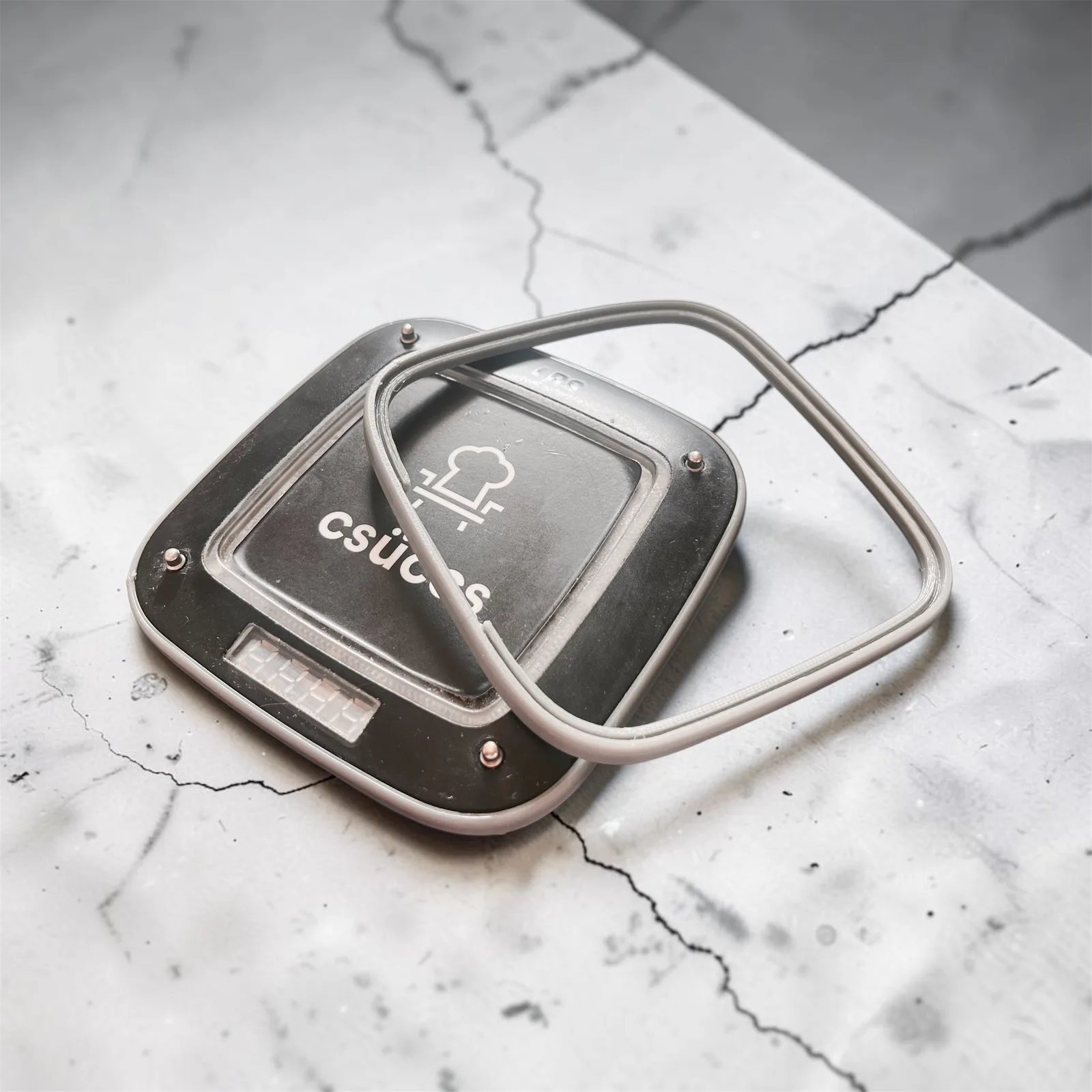
In industrial and commercial settings, a perfectly functional piece of equipment often becomes unusable because of a single small part failing — especially with electronics whose manufacturer sells no separate spare parts, only complete units. That’s exactly the problem a restaurant client brought to our team: the rubber frames on their table-side order-ready pagers had aged and split over the years, and could no longer protect the electronics from spilled drinks and other contamination. The solution was a TPU part 3D printed with FDM technology, which cost-effectively replaced a rubber frame the manufacturer no longer sold on its own.
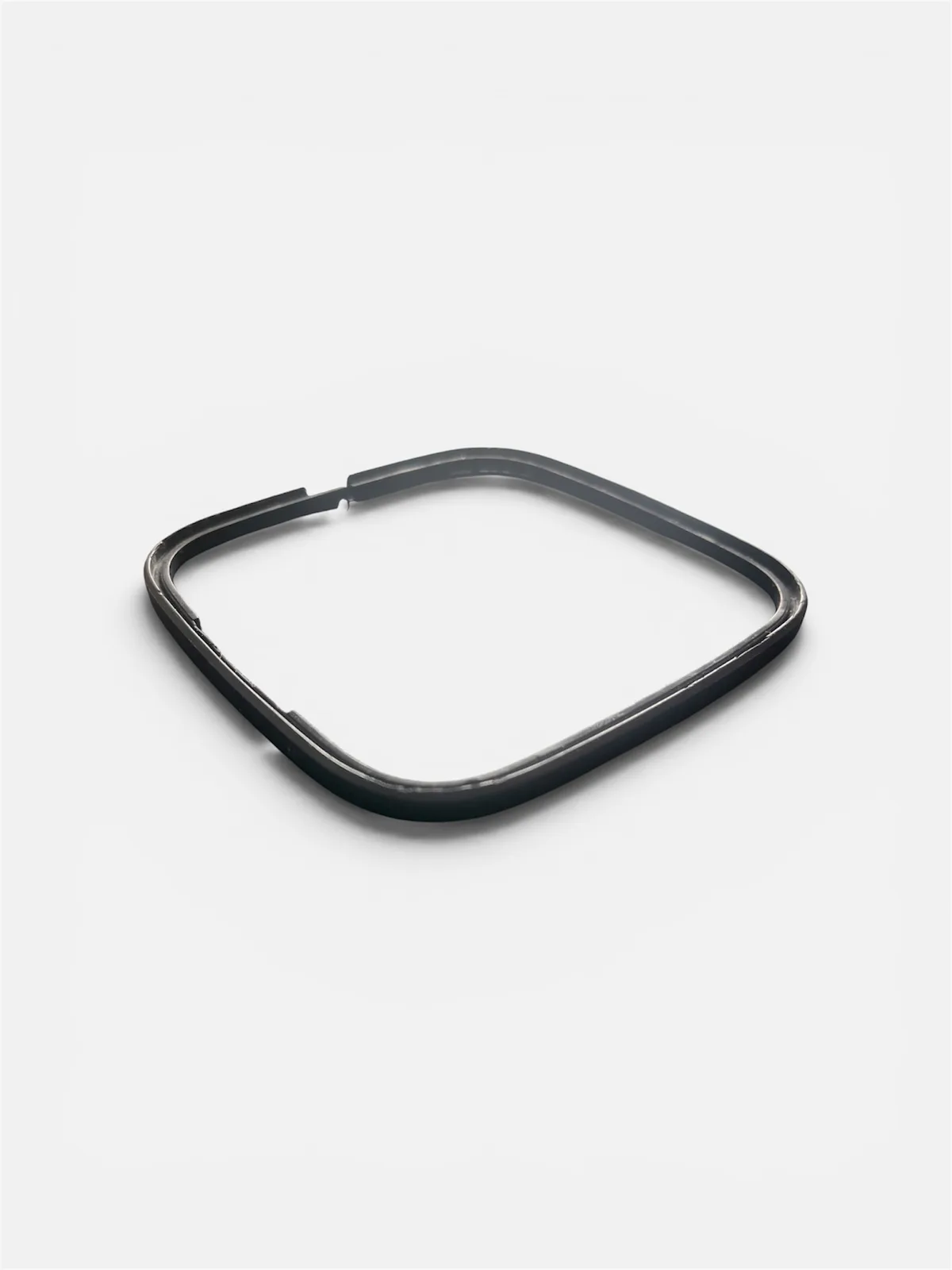
The problem: a full unit replacement over a part weighing a few grams
The pagers’ rubber frames had split in several places, lost their flexibility, and no longer sealed the device housing properly — liquid could have reached the electronics, potentially causing the whole unit to fail. Since the manufacturer only sold complete new pagers, a full replacement would have meant a significant cost to the client, even though what had actually failed was a rubber part weighing a few grams. This is a typical case where custom part manufacturing is a more economical and sustainable solution than the full replacement the factory supply chain otherwise forces.
With traditional manufacturing — injection tooling — producing this small a part in this small a quantity wouldn’t have paid off: the tooling cost and lead time simply wouldn’t have been recovered over a handful of units. 3D printing, by contrast, requires no tooling and has a fast development cycle, making even a single part economical — this project needed a small batch, which made additive manufacturing the obvious choice.
Remeasuring instead of 3D scanning
The first step in any project like this is digitally reconstructing the original part, typically via one of two routes: 3D scanning or measurement-based remodeling. Many people default to scanning, but that isn’t always the right call — as we also showed in an earlier project, remanufacturing a VW Golf 2 throttle lever, the right method always depends on the part’s geometry. In this case, the rubber frame had simple, easily measurable dimensions and regular geometry, so remeasuring the sample and the damaged part with precision instruments was enough — faster and cheaper than a full scanning process would have been. For more complex, organic-surfaced, or heavily deformed parts, scanning significantly speeds up development; we always choose whichever method delivers the best value for the specific part.
FDM TPU or MSLA elastic resin?
Two directions came up for manufacturing the rubber-like part: FDM TPU or MSLA elastic resin. We’ve covered MSLA and how it compares to FDM in detail in an earlier article — it delivers excellent resolution, an extremely smooth surface, and fine detail reproduction, and flexible resins are available for it too. In our experience, however, the elastic resins currently on the market tend to become brittle and stiffen over time, losing flexibility — a serious drawback in a restaurant environment where the part is under constant mechanical stress.
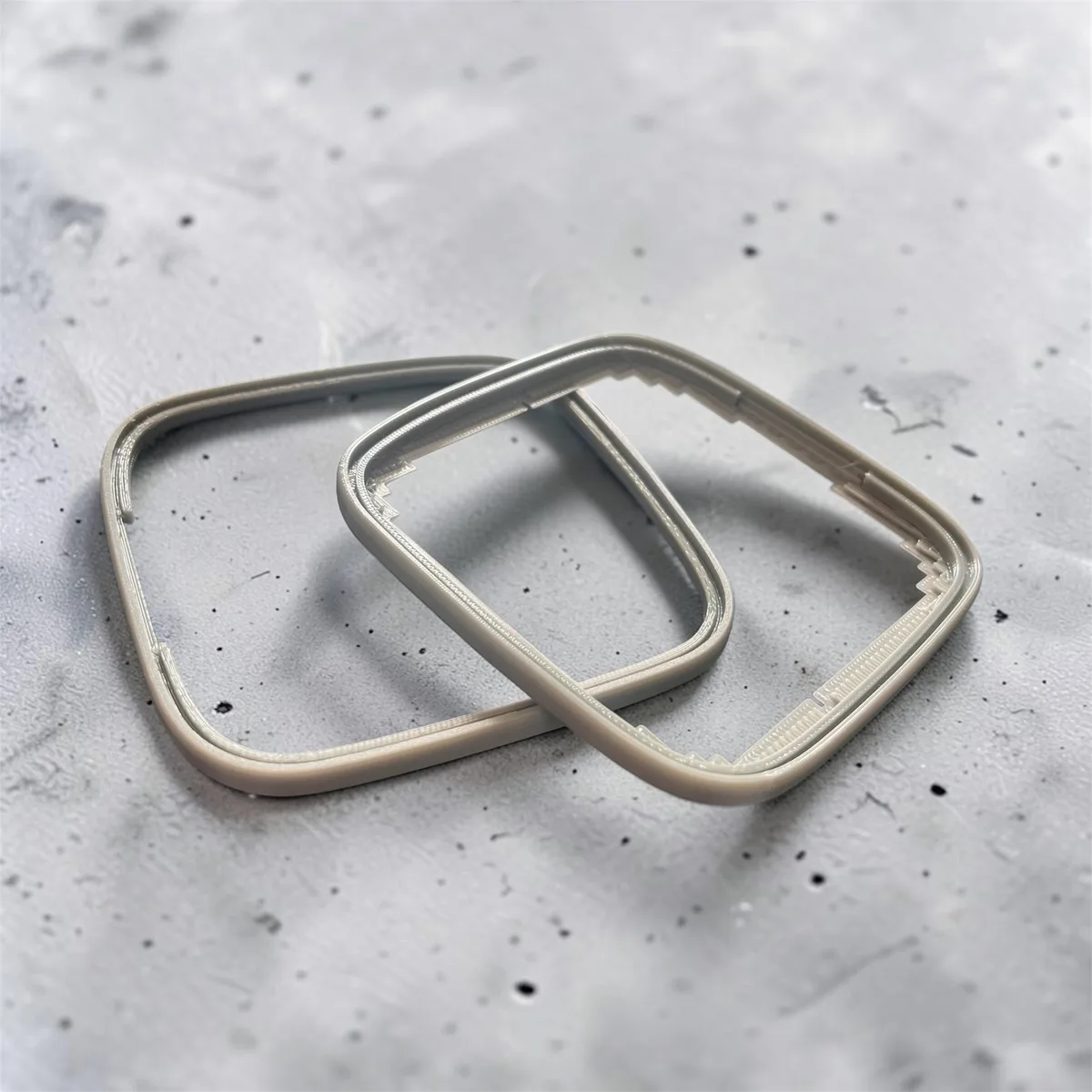
That’s why we chose TPU printed with FDM technology: excellent flexibility, high wear resistance, good tensile strength, and a long service life, retaining its properties even under repeated deformation. For the restaurant pagers, these properties mattered more than extreme surface quality — FDM TPU struck the right balance of durability, cost-effectiveness, and fast production.
The development process
1. Assessment
We took in the sample device and the damaged rubber part, then examined the damage, the mounting points, the fit, and the functional requirements.
2. CAD model and validation piece
Based on the remeasured dimensions, we built the new CAD model. Before starting the production batch, we printed a first validation piece to check fit, assembly, and functional performance — a step that significantly reduces the risk of an entire batch coming out with the wrong dimensions.
3. Small-batch production
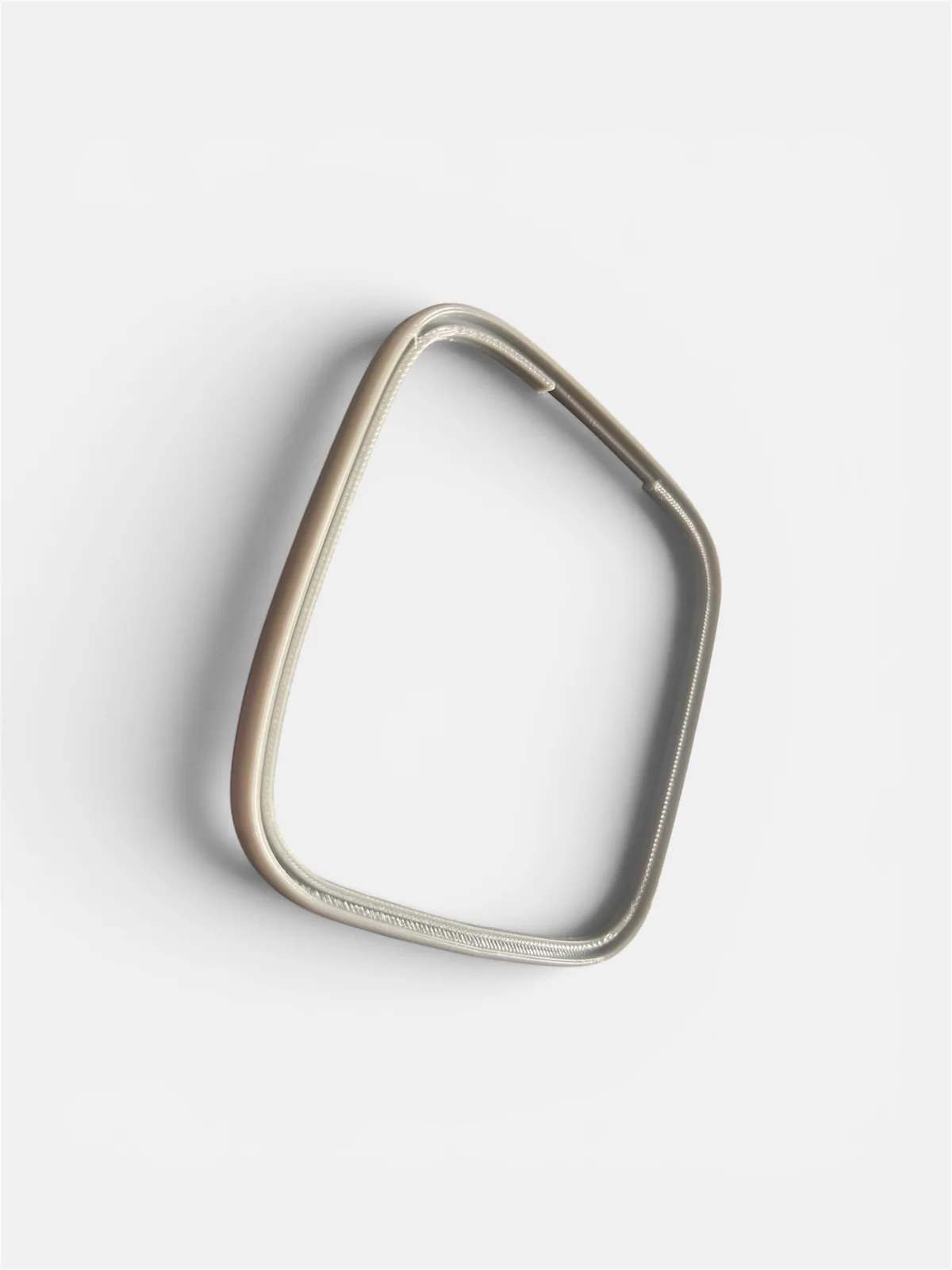
After a successful trial, we produced the first small batch, letting the client test the new parts under real operating conditions — especially important when a part faces constant mechanical stress and needs long-term reliability in daily use.
When does a 3D printed replacement part beat a full unit swap?
Many businesses assume 3D printing is only good for prototypes — in reality, more and more industries (machinery, automation, food service, logistics, maintenance, hospitality) use it to manufacture end-use parts too. It’s especially valuable when factory spare-part supply has ended, the original part is too expensive or takes months to source, and only a small quantity is needed. There’s a sustainability angle too: a part weighing a few grams failing doesn’t need to generate e-waste or send an otherwise working device to the scrap heap.
Summary
Replacing the rubber frame on a restaurant’s pagers might have looked like a minor task at first glance, but the right engineering approach — precision remeasuring, deliberate material selection, and a validation step — turned it into a durable, cost-effective, quickly manufactured replacement part, in a case where the manufacturer only offered a full unit swap. If you have equipment for which factory spare parts are no longer available, or need a custom plastic or rubber-like part, get in touch for a quote on our parts manufacturing service — we handle the whole process, from assessment through the digital model to the finished, small-batch part.
Related Articles
 Reverse Engineering Remanufacturing a Chemical-Resistant Pipe Adapter with Hybrid PETG-Copper 3D Printing
  Reverse Engineering Remanufacturing a Motorcycle Fog Light Bracket with 3D Scanning and PA12-CF15 Printing
  Reverse Engineering Remanufacturing a VW Golf 2 Throttle Lever with 3D Scanning and PA12-CF15 Printing
 Planning a Similar Project?
Send us your model or drawing — free consultation, with personalized quotes within 24 hours.