
The Suppressed Tears Sculpture — Large-Format Outdoor Additive Manufacturing
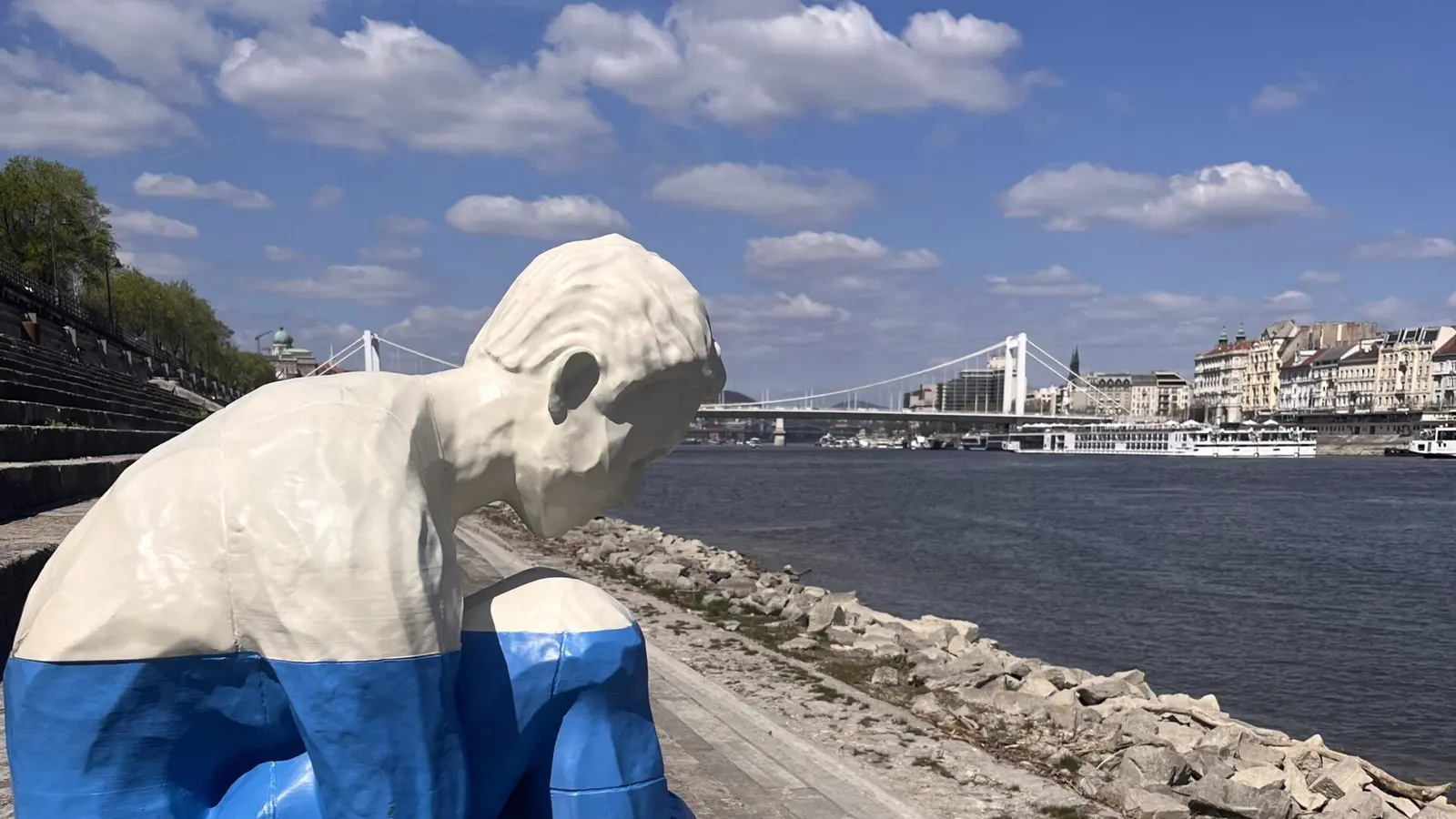
3D printing today goes far beyond prototyping. The “Suppressed Tears” sculpture is a good example of how additive manufacturing has become a reliable production method for large-format, durable, outdoor final products — with engineering design behind the scenes.
The project was commissioned by Mediator Group Kft. for the LESZ Foundation’s campaign, and was produced entirely by additive manufacturing from PETG. The goal was a public artwork that would hold up for years outdoors, including in an environment occasionally exposed to flooding — meaning its structural stability, appearance, and mechanical resistance all had to hold up over the long term.
Why Is 3D Printing Ideal for a Project This Size?
A near-life-size sculpture with complex geometry would carry significant upfront cost, a long lead time, and prohibitively expensive revisions with traditional technologies — CNC machining, casting, or hand sculpting. FDM 3D printing, by contrast, requires no dedicated tooling, can produce any complex geometry, lets the digital model be modified easily, and makes even a single piece economical to produce — while scaling easily to large objects. That matters especially where there’s no series production, yet the quality bar is still high.
Technical Basics and Overall Dimensions
The sculpture’s overall dimensions are 502 × 907 × 820 mm. Printing it used roughly 30 kg of PETG filament — about 3.2 km of 1.75 mm filament. The parts were printed continuously over two weeks, across multiple printers running in parallel.
- 0.2 mm layer height for detailed surfaces
- 0.4 mm nozzle diameter
- 1.5 cm thick, fully solid walls for load-bearing strength
- Dozens of precisely fitted component pieces
Splitting the sculpture into dozens of pieces didn’t just shorten the print time through parallel manufacturing — the smaller pieces were also easier to handle and transport, carried less risk of scrap, and thanks to the digital design, every piece fit exactly into place.
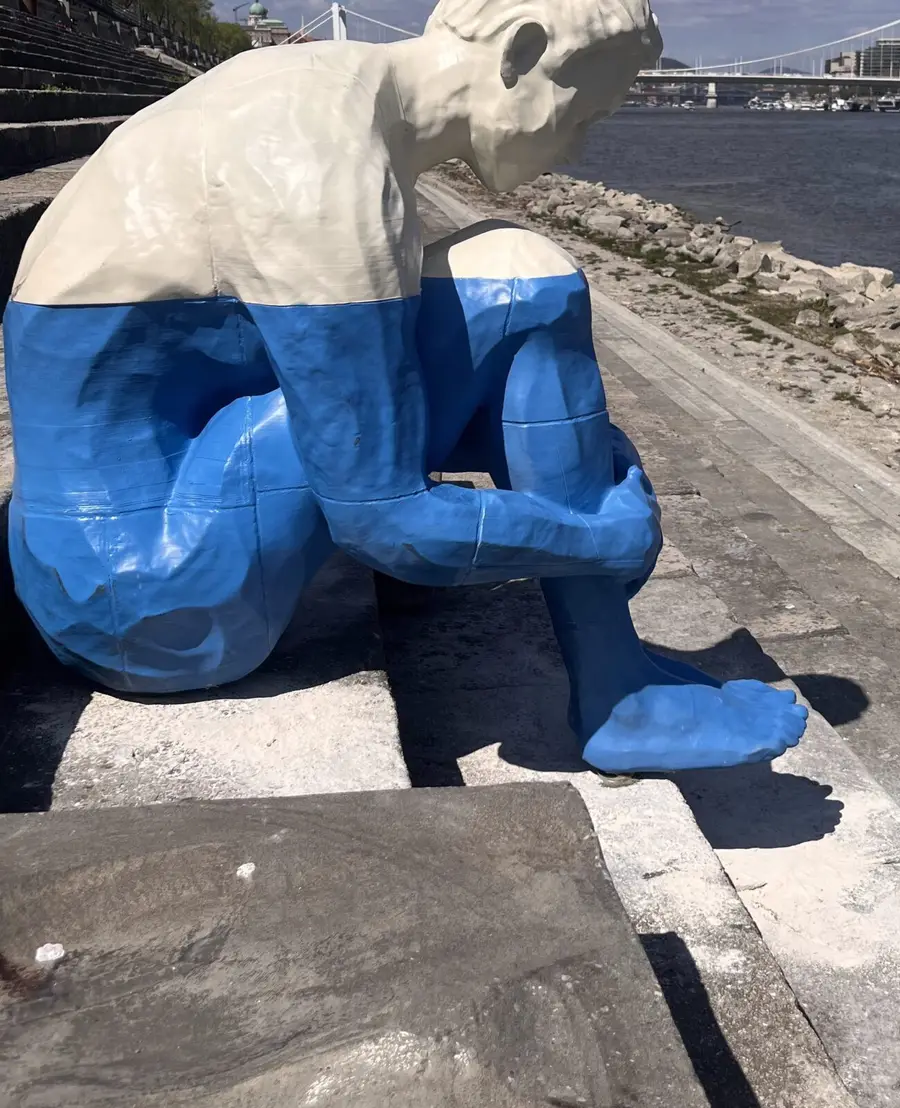
A Smart Structure: A Hollow Body Filled with Plaster
The body is hollow inside, with the interior filled with plaster. A fully solid PETG sculpture would have been neither economical nor technically optimal — the combined structure is both an economical and functional solution:
- More economical than manufacturing from solid PETG — PETG is significantly more expensive than plaster
- Plaster, denser than water, improves stability through added mass
- Allows internal steel reinforcements and mounting elements to be embedded
- The composite-like structure increases mechanical resistance, especially outdoors
The sculpture was installed on the Buda embankment of the Danube, at the foot of the Liberty Bridge, an area occasionally subject to flooding — which introduced entirely new engineering requirements: the structure couldn’t be allowed to float, shift, or fail to withstand water loading. This is ensured by the combination of its mass, internal metal reinforcement, and physical anchoring.
When the final product has to stand outdoors for years, engineering design matters just as much as artistic execution.
Assembly and Weatherproof Surface Treatment
Finishing the print was far from the end of the job — outdoor use demands professional post-processing. The pieces were joined using a paintable plastic sealant adhesive, sanded, then the entire surface was treated with a two-component plastic primer. Coloring and matte lacquering were done by Szín-Med Kft., ensuring UV and weather resistance along with an attractive, long-lasting finish. Without proper surface treatment, even the best structural design wouldn’t be enough for long-term outdoor use.

What Does This Mean for a B2B Partner?
The project demonstrates that modern parts manufacturing and industrial 3D printing are now capable of producing highly complex, large-scale final products — from large marketing installations and exhibition elements to museum reconstructions, film sets, custom cladding, and engineering prototypes. What these projects share is that even at low volumes, they have to meet high technical and aesthetic standards — which requires material knowledge, structural design, manufacturing experience, and post-processing quality that matter just as much as the printer itself.
Producing large-scale, outdoor 3D-printed objects requires serious expertise: material selection, load-rated structural design, and joining and surface-treatment know-how. If you need a custom, durable piece suitable for outdoor use — a sculpture, decorative element, or technical object — our parts manufacturing service handles the entire process under one roof, from technical consultation and CAD design through 3D scanning and reverse-modeling to manufacturing, surface treatment, assembly, and final installation.
Related Articles
Planning a Similar Project?
Send us your model or drawing — free consultation, with personalized quotes within 24 hours.