Manufacturing a Solar Park Model with FDM 3D Printing
Presenting large-scale industrial investments is often a serious challenge. A solar park spanning several hectares, an automated production line, or a specialized mechanical system can be difficult to showcase clearly and engagingly using only technical drawings or digital models.
This is where a detailed, scale-accurate model delivers real value — it presents the planned system in a tangible, hands-on way. 3D printing makes it possible to produce these models quickly, cost-effectively, and with high precision, supporting sales, investor discussions, and trade show presentations.
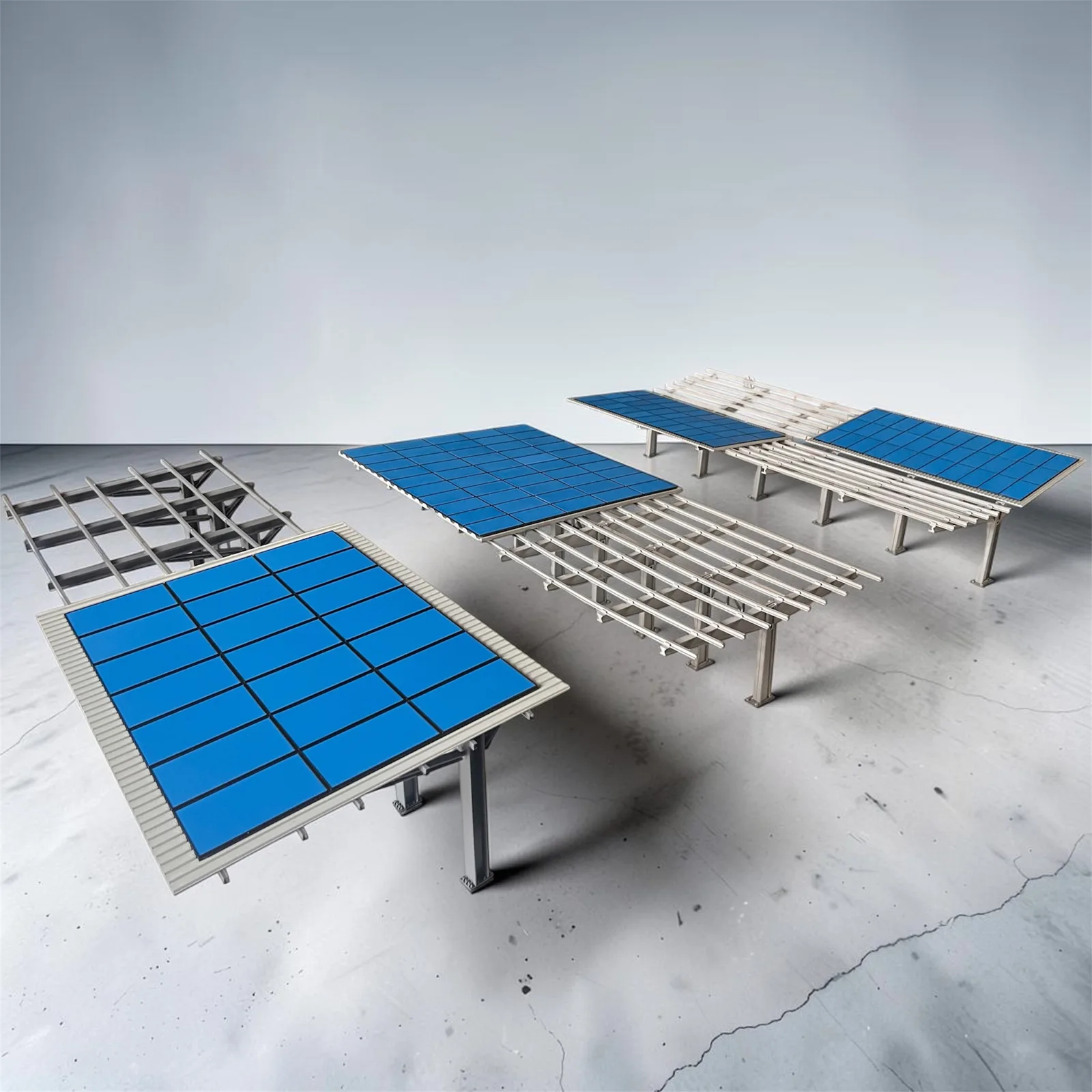
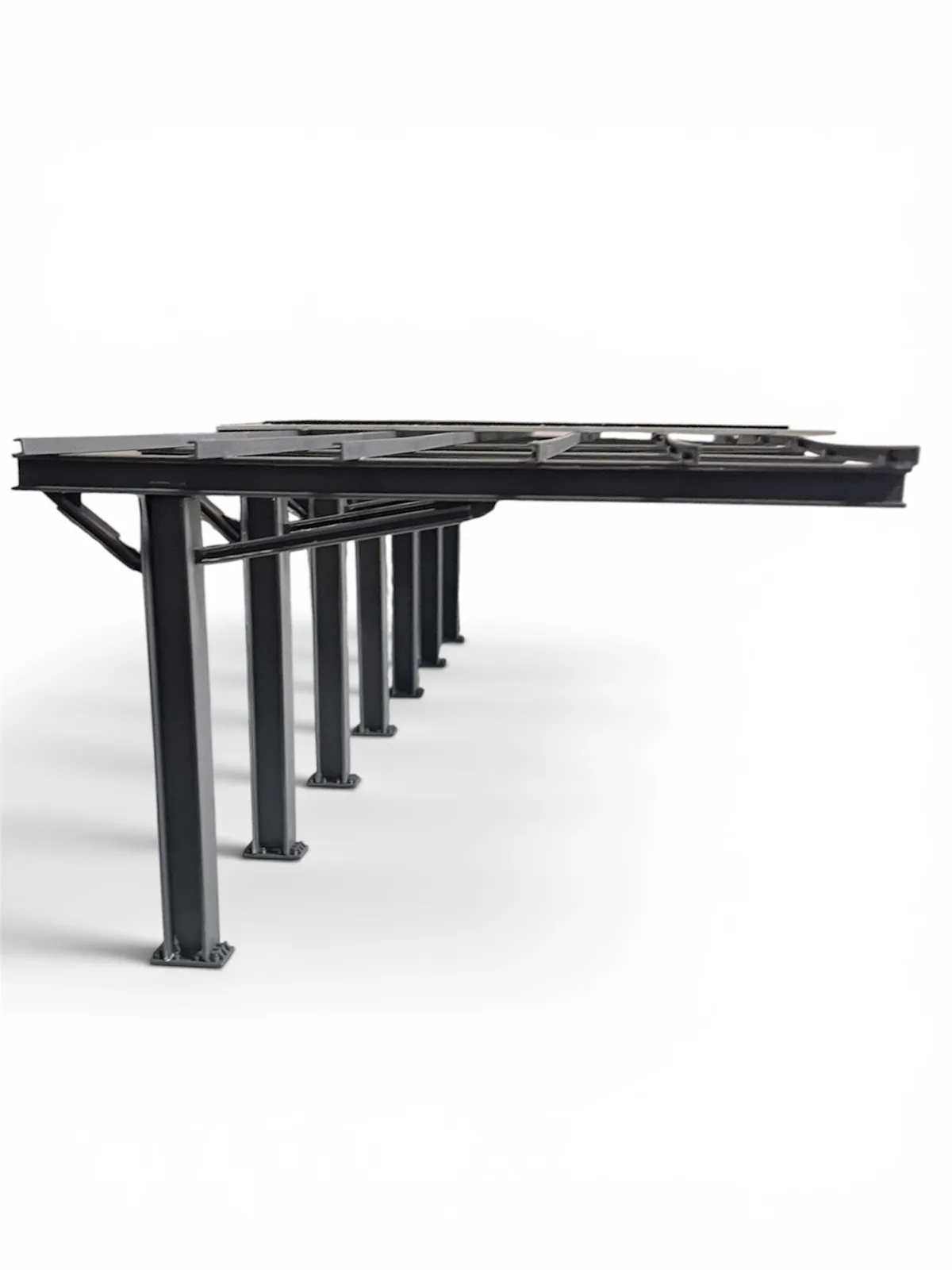
One of our recurring partners designs and builds custom solar parks. We regularly manufacture scale-accurate display models for them that give the entire project a professional visual representation. These projects are a good showcase of just how high-quality FDM-based parts manufacturing can be, even for complex assemblies.
Why do physical models matter in industry?
Modern CAD systems and 3D visualization are remarkably advanced, but a physically tangible version of an object still leaves a much stronger impression.
Scale-accurate models help:
- present a complete system more clearly,
- make it easier to understand how structural units relate to each other,
- make an investment’s presentation more compelling,
- speed up decision-making,
- create a more professional impression at trade shows and meetings.
This is especially true for complex systems like solar parks, where hundreds or even thousands of structural elements form a single unified system.
Manufacturing solar park models in practice
Our partner orders a custom scale model for every project. The task isn’t just 3D printing the parts — it’s running a complete manufacturing process.
Our projects typically include:
- preparing CAD models,
- manufacturability optimization of the model’s components,
- redesigning for FDM production,
- designing the necessary assembly solutions,
- sourcing an engraved acrylic base plate,
- manufacturing all the parts,
- full assembly and quality control,
- secure packaging.
The client receives a fully finished, ready-to-use display model.
FDM or MSLA? Choosing the right technology
Several 3D printing technologies could be considered for manufacturing these models, but for models of this size, FDM proves to be the most economical and practical solution. (For more on how these two technologies work, see our earlier article: How Does a 3D Printer Work?)
Economical manufacturing of large parts
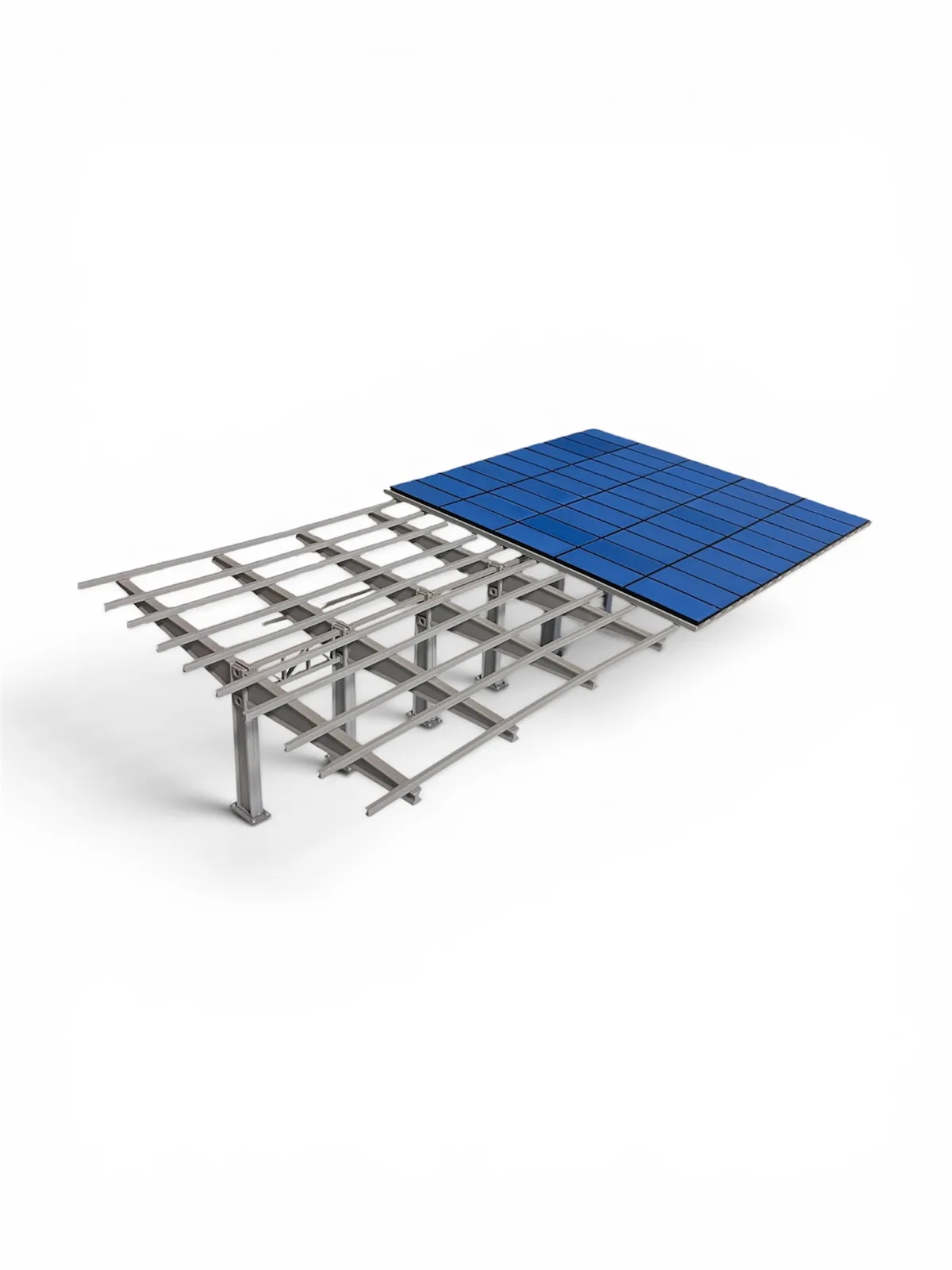
A typical solar park model has an overall footprint of roughly 800 × 400 mm. No single printer can produce a piece this size in one go, so we break the model down into many smaller parts. This not only makes printing possible, it also significantly reduces the risk of scrap.
Excellent mechanical properties
These models frequently travel to client meetings, trade shows, conferences, and investor presentations, so it’s important that each part has adequate strength. Most projects use PLA and PETG (for more on choosing between the two, see our article: 3D Printing Basics) — PLA delivers excellent surface quality, while PETG offers greater impact resistance for models that face frequent transport.
What does “true-to-character” detail mean?
Many people assume a model needs to include every single screw, rivet, and fastener. In practice, that’s neither technically nor visually the right approach: FDM’s layer thickness and nozzle diameter impose natural limits — a real screw head that’s several millimeters across would often scale down to just a few tenths of a millimeter, which can no longer be printed reliably.
So the goal isn’t an absolute geometric copy, but a true-to-character model that:
- captures the character of the structure,
- accurately presents the layout,
- clearly conveys the proportions,
- delivers a professional visual appearance.
This level of detail strikes the best balance for business presentations.
Parts manufacturing at model scale: 50–60 parts in a single assembly
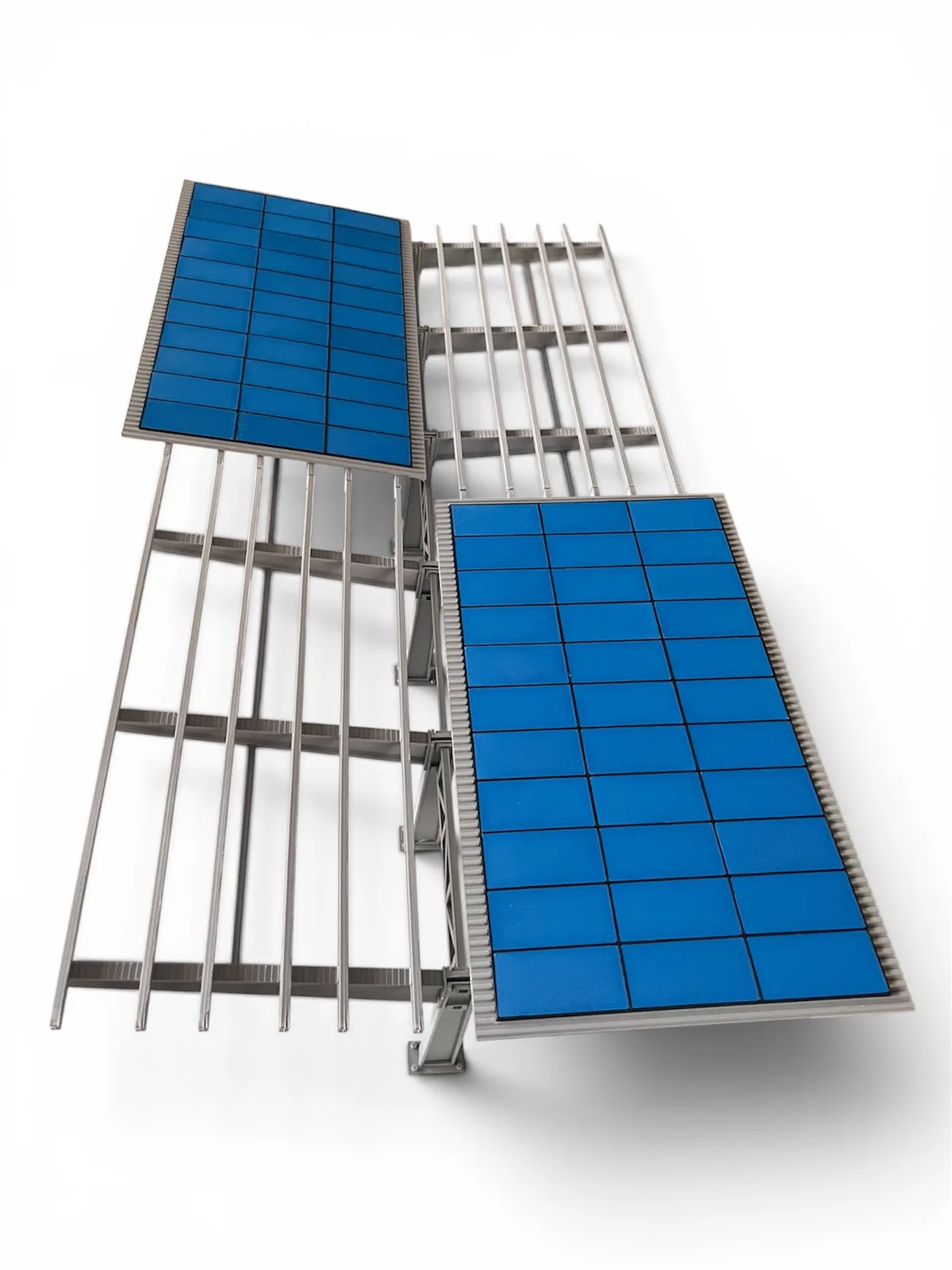
A single solar park model is a remarkably complex structure: typically 50–60 separate parts, hundreds of glued surfaces, numerous positioning connections, a separate base plate, and an engraved acrylic base make up the final assembly. This resembles a small-batch parts manufacturing project far more than traditional model-making — every part is produced as its own independent manufacturing unit.
Assemblability is one of the core principles of industrial parts manufacturing, and the same holds true for models. Every part gets its own fixing point, designed in already at the CAD stage — this means faster assembly, more precise positioning, fewer gluing errors, and easier repairs.
For some projects, the model’s geometry is complex enough that separate positioning jigs and custom assembly templates are needed. These ensure every part lands in exactly the right place, guarantee repeatability, speed up assembly, and reduce human error — the same method well known from industrial assembly lines, where manufacturing precision is the top priority.
Professional assembly, quality control, and shipping
Producing a single model can take up to a full work week — the project consists of several dependent stages: design, manufacturability optimization, 3D printing, post-processing (cleaning, deburring), assembly, and full quality control.
We typically use two-component cyanoacrylate adhesive to join the parts, which provides fast bonding, high strength, minimal gaps, and a durable connection. Every part is inspected during assembly, so the finished model is stable and visually clean.
Shipping matters just as much as manufacturing itself: the finished models contain many thin structural elements, so our client uses a custom storage case for every model, which reduces vibration, protects sensitive parts, and ensures safe transport.
When do 3D scanning, reverse-modeling, or MSLA come into play?
Not every project starts with CAD models. Sometimes only an existing part or an earlier model is available — in these cases, we build the new digital model using 3D scanning and reverse-modeling: digitizing the existing geometry, building a CAD model, optimizing for manufacturability, and then producing the new model. In an earlier project, remanufacturing a VW Golf 2 throttle lever, we followed exactly this path to replace a discontinued part.
MSLA technology, by contrast, offers extremely high resolution, which is mainly an advantage for small figures, fine decorative elements, and small-scale details. For large industrial models, FDM delivers the best price-to-value ratio, but the two technologies can also be combined when needed: larger structural elements produced with FDM, and especially fine details with MSLA.
Summary
Scale-accurate industrial models today are more than just eye-catching display pieces — they’re an effective communication and sales tool for companies. Producing an industrial model goes well beyond 3D printing itself: it requires engineering judgment, manufacturability knowledge, assembly experience, and the right choice of materials.
If you need a professional, scale-accurate model to showcase a solar park, production line, mechanical system, or custom industrial development, get a quote for our parts manufacturing services — we handle the entire process, from CAD preparation through assembly and quality control to secure packaging.
Related Articles

Planning a Similar Project?
Send us your model or drawing — free consultation, with personalized quotes within 24 hours.