
When Does an Injection Mold Not Make Economic Sense?
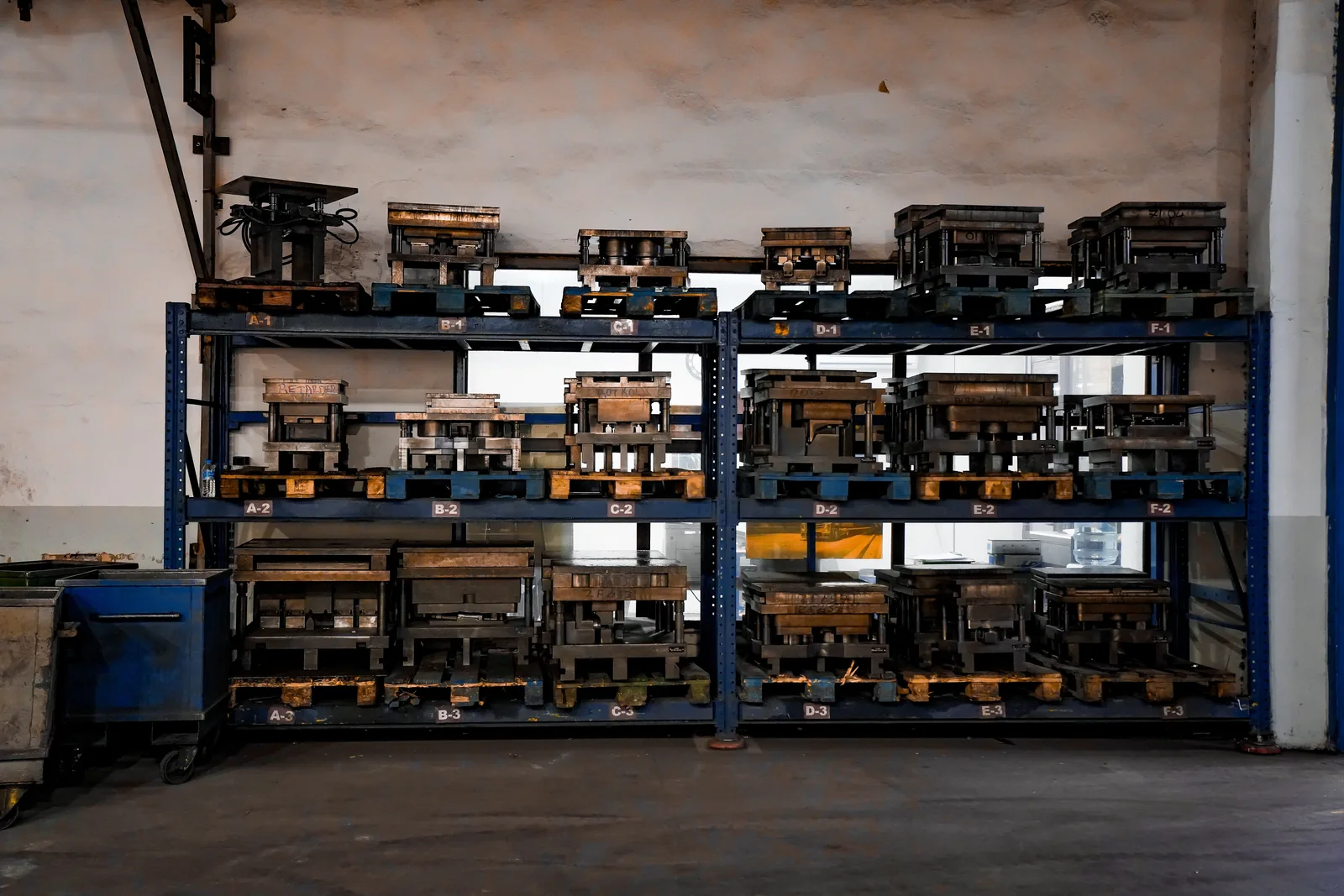
Every manufacturing project eventually arrives at the same question: should we invest in an injection mold, or is there a better way to manufacture this part? For many companies the answer seems obvious at first — injection molding is the go-to process for high-volume plastic components, prized for its repeatability, low unit cost, and fast cycle times. But one of the most expensive mistakes we see is assuming injection molding is always the right call simply because it offers the lowest price per part.
From an engineering standpoint, a manufacturing decision should rarely rest on piece price alone. It has to account for the product’s entire lifecycle — development cost, design uncertainty, production volume, market demand, lead time, inventory risk, and future design changes. In many cases, investing in tooling too early creates unnecessary financial exposure and limits a company’s flexibility exactly when agility would provide the biggest competitive advantage. This article walks through when injection molding is not the best engineering decision, how to evaluate the break-even point, and what to weigh before committing to a tooling investment.
Manufacturing Decisions Are Investment Decisions
Choosing a manufacturing process is fundamentally an investment decision, not just a production one. Every method carries three major cost components: initial investment, variable production cost, and operational flexibility.
Injection molding excels because its high initial investment is spread across thousands — sometimes millions — of identical parts. Industrial 3D printing, CNC machining, urethane casting, and other flexible processes typically require little or no tooling investment, but their per-part cost stays relatively constant.
The challenge is finding where these two cost curves cross. That crossing point is the economic break-even point, and it shifts considerably depending on part complexity, annual demand, expected product lifetime, material requirements, and engineering risk.
The Hidden Cost of Tooling
When the injection molding conversation starts, it usually starts with the price of the mold. Experienced manufacturing engineers know the mold itself is only part of the total investment — the rest typically includes mold design and validation, mold-flow simulation, prototype iterations, sampling and process validation, production qualification, engineering changes, and maintenance across the mold’s lifetime.
Depending on complexity, an industrial injection mold can run anywhere from a few thousand euros to well over €100,000, and substantially more for complex multi-cavity tools. The financial commitment is significant before a single production-quality part exists.
Engineering Risk Is Highest at the Beginning
One of the most overlooked realities of product development is that engineering uncertainty peaks in the earliest stages. Will customers adopt the product? Will the design need revisions? Will the chosen material perform as expected? Are assembly tolerances acceptable? Will field testing reveal weaknesses no one anticipated?
Committing to expensive tooling before these questions are answered converts technical uncertainty directly into financial risk. Engineering is fundamentally iterative — every design evolves. The earlier those iterations happen using flexible manufacturing methods, the lower the overall project risk.
Design Changes Get Expensive After Tooling
Engineering changes are inevitable — the question isn’t whether they’ll happen, it’s when. Before tooling, revising a CAD model might take a few hours of engineering work. After tooling, even a minor dimensional change can mean EDM machining, welding and re-machining, new inserts, additional validation, and production downtime — in severe cases, the entire mold may need replacing.
The lesson is simple: the later a design change happens, the more it costs. This lines up directly with established methodologies like Design for Manufacturing (DFM) and stage-gate development processes used widely across industry.
When a Lower Unit Cost Is Misleading
Decision-makers often compare manufacturing methods on cost per part alone. Here’s an illustrative example at a production run of 500 units:
| Manufacturing Method | Tooling Cost | Unit Cost | Quantity | Total Cost |
|---|---|---|---|---|
| Industrial 3D Printing | €0 | €18 | 500 | €9,000 |
| Injection Molding | €40,000 | €2 | 500 | €41,000 |
Injection molding produces a dramatically lower unit cost, yet the total project cost is more than four times higher. Now the same comparison at 50,000 parts:
| Manufacturing Method | Total Cost |
|---|---|
| Industrial 3D Printing | €900,000 |
| Injection Molding | €140,000 |
The economics reverse entirely. Neither process is universally superior — each becomes the better choice under different production scenarios. This example is illustrative, meant to show the shape of the cost structure, not to represent a universal pricing model.
Production Volume Is Only One Variable
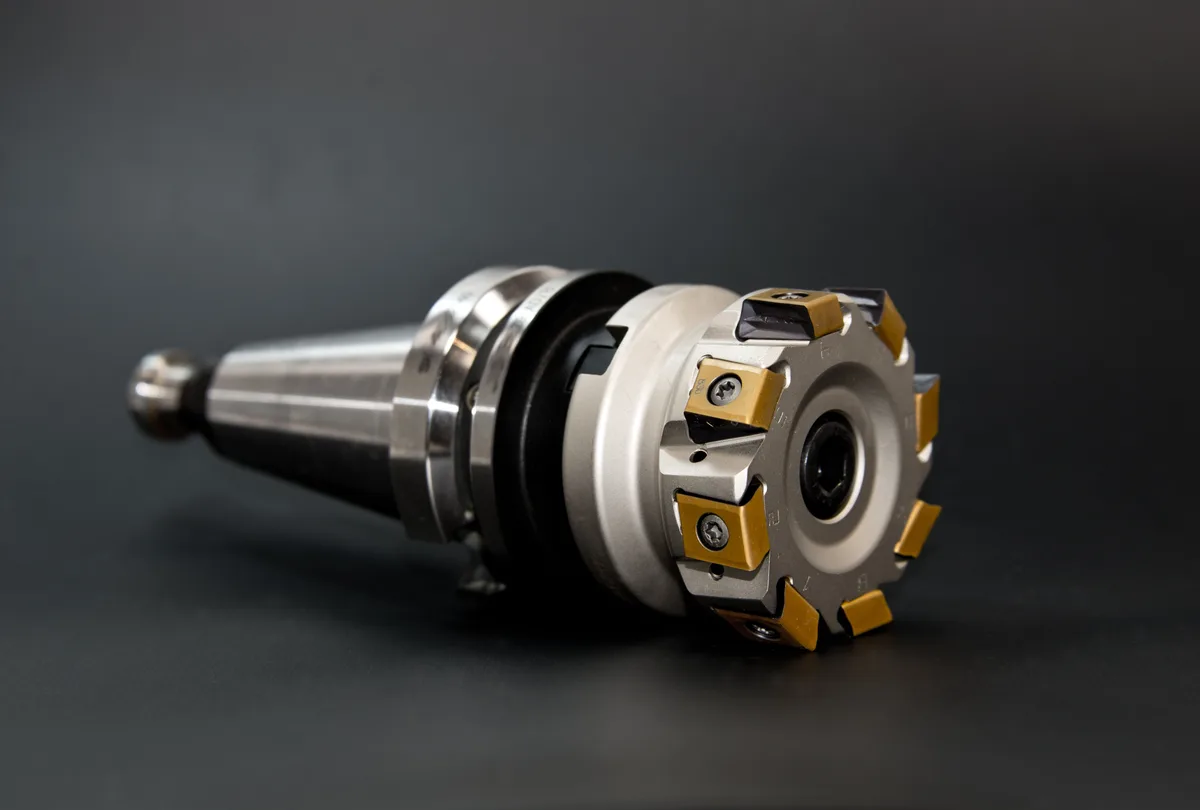
A common misconception is that the manufacturing decision depends solely on annual production volume. In reality, engineers weigh several variables at once: forecast accuracy, product lifecycle, design maturity, material availability, lead-time requirements, assembly complexity, regulatory validation, supply-chain resilience, inventory strategy, and maintenance needs.
A product expected to sell 20,000 units over five years has a very different investment profile than one expected to sell the same quantity in three months. Time matters. Cash flow matters. Risk matters.
Manufacturing Flexibility Has Economic Value
Traditional ROI calculations rarely assign value to manufacturing flexibility, yet flexibility often determines whether a company can respond effectively to changing market conditions. Low-volume manufacturing methods let companies implement engineering changes immediately, produce spare parts on demand, reduce inventory, customize products, validate market demand before scaling, and avoid obsolete stock.
As we cover in more detail in our 3D printing basics article, additive manufacturing’s biggest advantage is rarely the price of a single part — it’s the impact on the entire development and production process. These benefits are hard to quantify but frequently outweigh manufacturing cost differences during a product’s early lifecycle.
Transitioning From Prototype to Production
Many organizations treat prototyping and production as entirely separate phases. Modern engineering practice increasingly treats manufacturing as a continuous progression: functional prototypes for engineering validation, pilot production for customer testing, low-volume manufacturing for early market launch, incremental design refinement, tooling investment once demand stabilizes, and finally high-volume production.
This staged approach minimizes engineering risk while preserving flexibility, and lets teams collect real-world performance data before committing to capital-intensive production assets.
Design for Manufacturing vs. Design for Additive Manufacturing
Products optimized for injection molding differ fundamentally from products optimized for additive manufacturing. Traditional Design for Manufacturing (DFM) prioritizes uniform wall thickness, draft angles, mold release, gate placement, cooling efficiency, and tooling simplicity.
Design for Additive Manufacturing (DfAM), by contrast, lets engineers exploit geometric freedom — integrating functions, reducing part count, incorporating internal channels, or creating lattice structures that would be impractical with conventional tooling. Neither philosophy is universally better; the right approach depends on the intended production process and product objectives. Industry guidance such as ISO/ASTM 52910 (Design for Additive Manufacturing) provides structured recommendations for designing parts specifically for additive workflows.
A Practical Decision Framework
Before approving an injection mold investment, it’s worth challenging a few assumptions:
Is the design fully validated? Has the product completed functional testing?
How confident are the demand forecasts? Forecast uncertainty directly drives tooling risk.
Will the design stay stable for several years? Products in fast-moving industries often go through continuous redesign.
How expensive would engineering changes become? Post-tooling modifications can easily outweigh the savings from a lower unit price.
Does production need flexibility? Industries defined by customization or volatile demand often benefit from more adaptable manufacturing methods.
Where’s the economic break-even point? Evaluate total project cost, not just the manufacturing cost per part.
Real-World Engineering Examples
Industrial Automation
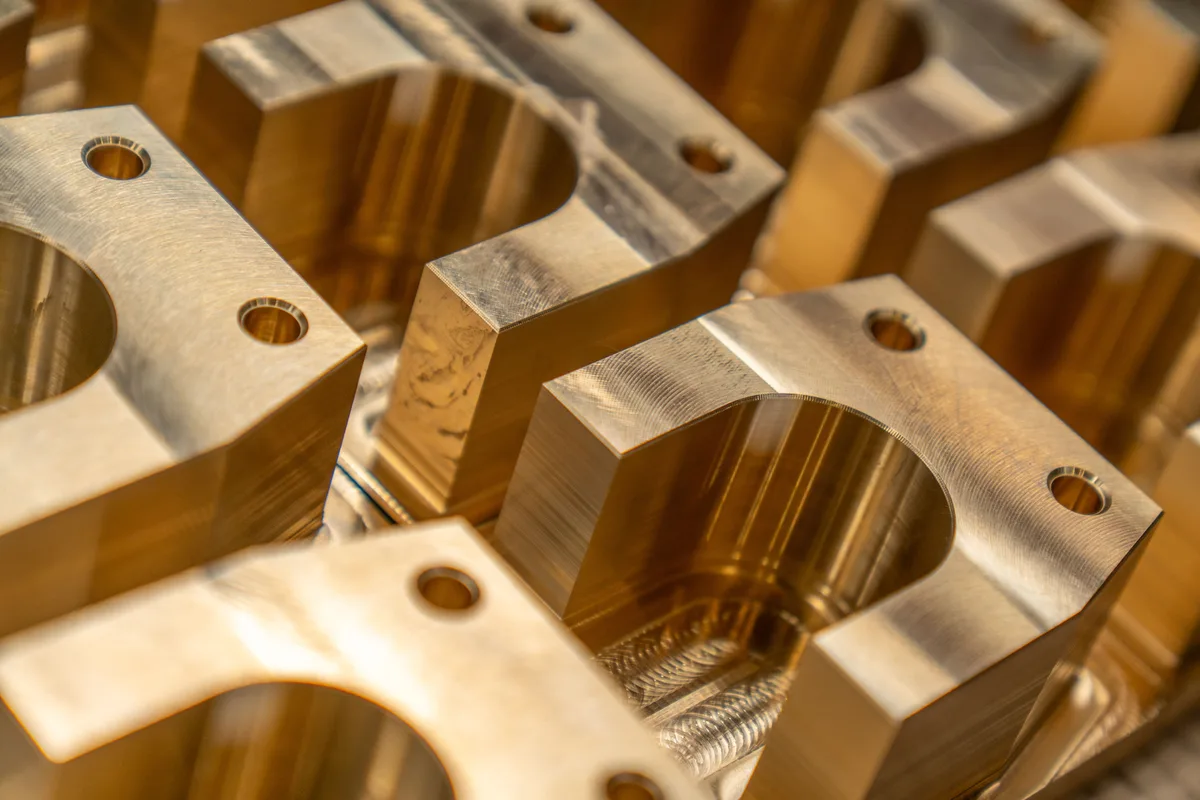
Machine builders frequently need replacement parts for legacy equipment where annual demand stays under 100 units. Dedicated tooling rarely pays for itself in that scenario — flexible manufacturing keeps spare parts available without tying up capital in a mold. We’ve run into exactly this situation ourselves: remanufacturing a discontinued VW Golf 2 throttle lever once the original manufacturer stopped supplying it, using 3D scanning and reverse engineering to recreate the part.
Medical Device Development
Medical products typically go through multiple validation cycles before regulatory approval. Investing in production tooling before the design is frozen introduces unnecessary financial risk. Flexible manufacturing methods allow rapid engineering changes throughout verification and validation.
Consumer Products
A startup launching a new product rarely knows actual market demand up front. Ordering 50,000 injection-molded parts before customer adoption is validated can create substantial inventory risk. Launching with low-volume manufacturing often delivers valuable market feedback while preserving cash flow.
Engineering Decisions Should Weigh Opportunity Cost
Capital invested in tooling can’t be invested elsewhere. The opportunity cost of tooling can include delayed product development, postponed automation projects, reduced R&D investment, slower market entry, and constrained cash flow. From a business perspective, preserving capital during uncertain product phases can meaningfully improve an organization’s resilience.
Standards and Best Practices
There’s no single standard that determines when an injection mold becomes economically justified, but several established frameworks support sound engineering decisions:
- ISO 9001 — quality management emphasizing risk-based thinking and continual improvement.
- ISO/ASTM 52900 — standard terminology for additive manufacturing.
- ISO/ASTM 52910 — guidance for design for additive manufacturing.
- Product development methodologies including Design for Manufacturing (DFM), Failure Mode and Effects Analysis (FMEA), and stage-gate decision processes.
These frameworks encourage a structured evaluation of technical risk, manufacturability, and lifecycle economics rather than a focus on immediate production cost alone.
The Bigger Picture
Engineering is fundamentally the discipline of balancing competing constraints — cost, quality, lead time, flexibility, manufacturability, reliability, and scalability are all interconnected. Optimizing one variable at the expense of the others rarely produces the best outcome.
The most successful manufacturing strategies recognize that the “best” process is highly context-dependent. Sometimes it’s injection molding. Sometimes it’s CNC machining. Sometimes it’s industrial 3D printing. And sometimes the smartest decision is postponing tooling until uncertainty has been reduced. Our job as engineers isn’t to promote a specific technology — it’s to identify the solution that delivers the greatest value across the product’s entire lifecycle.
Summary
Injection molding remains one of the most efficient processes for high-volume plastic production, but its economic advantages only show up when the product, market, and production strategy genuinely justify the upfront investment. Engineering teams that evaluate total lifecycle cost, design maturity, demand uncertainty, and operational flexibility make better-informed manufacturing decisions than those relying solely on unit-price comparisons.
Three practical takeaways: first, evaluate total lifecycle economics, not just cost per part — tooling, validation, engineering changes, and inventory can outweigh the apparent savings from a lower unit cost. Second, delay irreversible investments until design uncertainty has been reduced — early flexibility often saves far more than early optimization. Third, choose the manufacturing process that fits the product’s current stage, not its ideal future state — scaling too early can be as costly as scaling too late.
If your product is still early in development and the timing of a tooling investment is uncertain, request a quote for our parts manufacturing service — we produce economically at low and mid volumes with industrial 3D printing and CNC machining, no tooling required, until demand stabilizes.
Related Articles
Planning a Similar Project?
Send us your model or drawing — free consultation, with personalized quotes within 24 hours.